
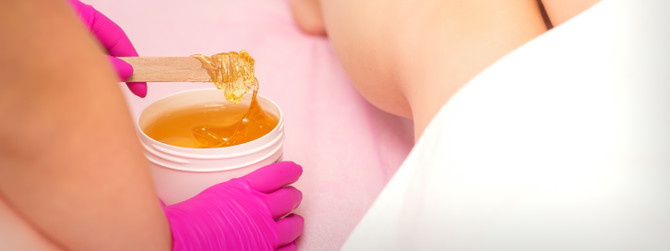
Throughout the history of waxing we have encountered many different experiences: good ones, bad ones, and ugly ones... but, the truth is, there is no need to be scared of waxing! At Beauty Image, our state-of-the-art waxing systems as well as our top-quality hard wax and soft wax, provide our customers with trustworthy products to help their success as estheticians and that of their clients to feel at ease. Continue reading to dive deeper into hard wax versus soft wax, its pros and cons, and much more. Once you know exactly which wax is optimal for different areas of your body, you will certainly be more confident in waxing.
Hard Wax vs. Soft Wax
There are a wide array of waxes out there, mainly falling into two main categories:
hard wax and soft wax. Soft wax is the usual go-to for body waxing. Soft wax is applied with a spatula or
roll-on cartridge before being removed using a non-woven strip. Soft wax is
best suited for larger areas such as arms, legs, and backs.
Hard wax requires a bit more expertise. Hard wax is thicker and applied at body temperature with a spatula. Once the wax hardens,
it is removed without a strip. When it comes to face waxing, hard wax is
generally favored. Additionally, professionals believe when it
comes to sensitive areas such as the skin around the bikini and armpits, hard wax is also
the best option. Hard wax attaches to the hair and not the skin, this reduces discomfort and minimizes irritation.
That being said, hard wax is ideal for Brazilian waxing. Why? Unlike traditional bikini waxing, where a small strip of hair is left on top, in Brazilian wax, the entire area is depilated from the labia to the rear. This area in particular is extra sensitive because the hair grows extra coarse since there is growth in different directions, making hard wax more effective and less painful.
Hard Wax - Pros and Cons
- Hard wax is less painful than soft wax on the face, bikini, and armpits.
- Hard wax leaves no sticky residue making it easier to clean up.
- Hard wax can be reapplied twice in the same area.
- Hard wax is commonly more costly and time-consuming when used in larger areas.
- When using hard wax, hair follicles, and pores are opened up because of the heat, making it much easier to depilate the hair.
Soft Wax - Pros and Cons
- Soft wax adheres to the skin, exfoliating the skin while depilating.
- Soft wax grabs the finest and shortest hairs more effectively, working better on large areas of the body.
- Unlike hard wax, soft wax cannot be re-applied to the same spot twice without irritating the skin.
- Soft wax is commonly stickier than hard wax, there is no extra preparation required.
- Soft wax tends to last longer and be more cost-efficient than hard wax.
Are you ready to
treat yourself to a professional wax experience? You're sure to find everything you need in our
range of state-of-the-art beauty products. When you look great, you feel great!
To learn more contact
Beauty Image USA at
TOLL-FREE at 888-513-8815.
If you found this article helpful then let us
know in the comments section below. Likewise, feel free to share it on any of our social media below. Want us to cover another topic of your interest about hair removal products? If so, then like us and follow us on social media,
and post to any of our social media profiles the topic you'd like us to
discuss:
Facebook @BeautyImageUSA and Instagram
@beautyimageusa